Rust secret mountain base guide shows how a tiny hidden stash survives a whole wipe
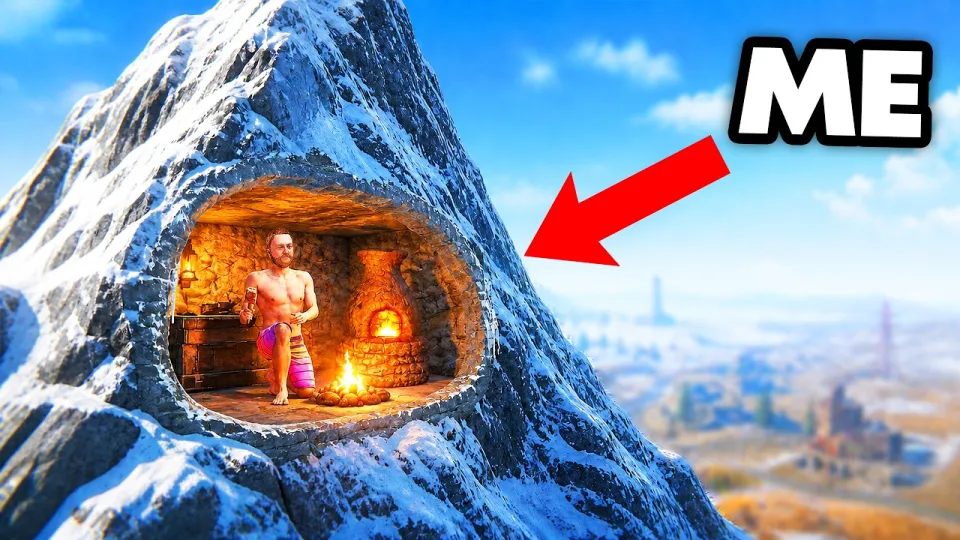
Video: I Lived in a Secret Mountain Base in Rust
You can order the same kind of articles for your own video to boost it on YouTube and Google. Just message the Telegram bot @sat_sit_bot. The bot writes and publishes the articles itself (with your YouTube video embedded) on popular topical websites (no ads). Try it free: 50 articles on us.
Key takeaways
- Memeio's video is built around one goal: a base nobody finds for an entire wipe cycle.
- Location beats camouflage — a small footprint away from roads and monuments matters more than paint or rock texture.
- Upkeep is the real killer of hidden bases: a stash that decays is found by the loot goblins anyway.
- Broken wooden spears can be recycled into stone spears, effectively doubling your early raiding tools.
- Cheaters and roaming groups, not base hunters, are the main threat to any hidden mountain build.
A Rust secret mountain base works because the map is huge and most players only check the obvious places. Instead of hiding a base with paint and decoration, you shrink it, push it into terrain that nobody bothers to climb, and keep it cheap enough to maintain every day. That is the whole idea behind Memeio's mountain-base run, and it is a strategy any solo player can copy — you can follow the creator's updates at Memeio on X.
The appeal is simple: a base that is never found is never raided, and a base that is never raided costs you nothing but upkeep. In a game where a single rocket volley can erase a week of farming, invisibility is cheaper than armour.
Why a secret mountain base in Rust beats a bigger, better-defended one
A hidden base wins because raid defence is a losing maths problem for solos. Every wall you add is a wall someone else can break, and every extra square metre of footprint is another reason for a passing duo to stop and stare.
Memeio's premise — living out a wipe in a mountain hideout that nobody notices — leans on three mechanics that are easy to underestimate:
- Terrain does the camouflage. Cliffs, slopes and rock formations break line of sight far better than any skin or paint. Players scan flat ground, roads and monument perimeters; they rarely sweep the vertical faces of a mountain.
- Small bases have small signatures. A compact structure has fewer doors, fewer lights and less loot glow leaking through gaps, so it draws fewer eyes at night.
- Upkeep scales with size. A tiny footprint costs a handful of resources per day, which means you can log off for a day without coming back to a decayed shell.
There is a limit, though. A structure that visibly juts out of a ridge is not hidden, it is a landmark. The camouflage joke that runs through the community reaction to the video is fair: hiding behind your own hands only works if nobody looks in your direction.
Picking a spot that survives a full wipe cycle
Location selection is 80% of the result, and the best spots share the same boring traits. You want distance from spawn beaches, roads, monuments and popular build clusters, plus a terrain shape that makes your footprint look like part of the rock.
A practical checklist for scouting a mountain stash:
- Walk the ridgeline, not the valley. Approach routes that require climbing filter out most casual roamers and almost all naked farmers.
- Check the neighbours. Two other bases within a short sprint of your spot means your "secret" is a shared courtyard.
- Count the sightlines. If you can see a monument, players at that monument can usually see you. Pick a spot that is blind from the nearest point of interest.
- Test the terrain collision. Slopes that swallow foundations let you sink a small build into the hillside, which is where genuinely hard-to-spot stashes come from.
- Plan the exit. A hidden base with one narrow choke point is a coffin if a group finds it while you are inside.
Mountain builds also come with a free early-warning system: the noise of someone climbing toward you is unmistakable, and the vertical approach slows attackers down enough that you can react.
The eco-raiding trick that doubles your early tools
Early-game Rust is decided by how efficiently you convert junk into damage, and one recycling trick is worth more than most base advice. Broken wooden spears can be turned into stone spears, so a few stacks of stone effectively double the number of usable throwing weapons you carry.
The routine is straightforward:
- Craft wooden spears from wood and stone as normal.
- Throw them until they break — a broken spear stays in your inventory as a separate item.
- Keep broken spears ahead of unbroken ones in your inventory so you can craft the next batch without shuffling.
- Convert the broken ones into stone spears with a small stone cost and repeat.
For a solo living out of a mountain stash, that means cheap pressure on soft targets: wooden doors, unupgraded walls and players who built a 2x2 on flat ground next to a road. It also means you can afford to lose gear, which is the entire point of a disposable loadout.
Upkeep, storage and the day-to-day of a hidden stash
A hidden base is only hidden while it exists, and decay is the most common way these builds die. Log in daily, top up the tool cupboard, and keep the stash small enough that one farming run covers several days of upkeep.
Storage deserves its own plan. Do not stockpile everything in one room — split loot between the hidden base and a couple of low-value stashes so a single unlucky discovery does not end your wipe. Keep the visible part of the base deliberately disappointing: a small box with junk, a furnace and a sleeping bag reads as an abandoned starter, not as a target worth rockets.
Two more habits pay off:
- Never lead a fight home. If someone is chasing you, run toward a monument or a different base, not toward the mountain.
- Vary your route. A player seen climbing the same slope twice will be followed the third time.
What actually gets hidden bases found
The threats to a secret mountain base are rarely base hunters, and the community around the video is blunt about the biggest one: cheaters ruin every game. A player using ESP or aim assistance does not need to spot your camouflage at all — your walls are visible through the terrain, and no amount of clever placement helps.
Beyond that, the realistic failure modes are:
- A neighbour builds nearby. Once someone puts a base at the foot of your mountain, your slope becomes part of their daily route.
- You get followed. Greed, a full inventory and a slow escape are how most stashes are discovered.
- The base grows. Every expansion adds doors, lights and noise, and the camouflage story collapses.
- Decay. A missed upkeep day turns a fortress into a ruin that anyone can walk into.
That is why the honest version of the strategy is not "invisible base" but "base nobody has a reason to check". The community joke about bases that stick out of a mountain 15 feet from two others lands because it is true: most so-called secret bases are secret only to players who are not looking.
How to adapt the idea to your own wipe
Copy the principle, not the exact spot. Start with a one-by-one or two-by-one footprint, place it where terrain hides the silhouette, and treat the first two days as a test: if nobody walks past, the location is good; if you see traffic, move before you invest.
For solos coming from other survival games, the logic is familiar — the best raid defence is never being raided, and the only reliable way to achieve that is a location nobody has a reason to visit. A hidden pocket of terrain, a tiny footprint and a boring exterior do more work than any wall upgrade.
Useful links
- Memeio on X — creator updates, clips and announcements.
- Epidemic Sound — the music library credited for the video's soundtrack.
Final thoughts
A Rust secret mountain base is not magic camouflage; it is a discipline of small footprint, awkward terrain and cheap upkeep, and the video makes that trade-off easy to see. The strongest takeaway is that hiding beats defending for solo players, because a base nobody finds never needs to survive a raid. Treat the location as the build, keep the stash disposable and never lead a chase back to your slope. Memeio's run is a useful stress test of that idea, and the channel is worth following if you want more solo survival experiments like it — check Memeio on X for what comes next.
Source: I Lived in a Secret Mountain Base in Rust · Markdown version
Questions & answers
Is a secret mountain base in Rust actually safe from raids?
It is safer than a visible base of the same size, but not immune. Hidden bases survive because nobody has a reason to check the spot, not because the walls are strong. If a group or a cheater finds it, a small stash falls fast, so keep the loot split and the structure cheap.
How much upkeep does a tiny hidden base need?
Small footprints cost very little per day, which is exactly why they suit solo players. The catch is that you still have to log in regularly to top up the tool cupboard, because a decayed base is an open invitation for anyone passing by.
What is the broken spear trick in Rust?
Broken wooden spears can be crafted into stone spears for a small stone cost, so you effectively get more throwing weapons from the same materials. Keep broken spears ahead of unbroken ones in your inventory so crafting the next batch does not require reshuffling.
Why do so many hidden bases get discovered anyway?
Most are found because of player behaviour, not camouflage failure. Getting followed home, building too close to other bases, expanding the stash or missing upkeep all give away a location. Cheaters with ESP make hiding pointless regardless of placement.